First, How Psychotherapy Works
It is perfectly natural and also a strength to wonder how psychotherapy can help.
Please take a moment to watch a video about how psychotherapy works from The School of Life in London:
Please take a moment to watch a video about how psychotherapy works from The School of Life in London:
|
Therapy is a way to increase self-awareness and get to the root of the problem. Indeed, many people find psychotherapists to be a tremendous asset. Therapists can provide caring support, problem-solving skills, enhanced coping strategies for depression, anxiety, relationship and family troubles, help uncover and resolve childhood issues, process grief, manage stress, help clear creative blocks and also offer helpful perspectives on the daily challenges of life. If your curiosity about therapy has brought you this far, perhaps you will be willing to go a little further and learn more about how therapy works.
Transformation through relationship Each person and each couple have their own different issues and goals for therapy, and psychotherapists have their own unique life experiences, training and theoretical perspectives to offer in the therapeutic process. I work diligently with you to first create a secure and unique therapeutic relationship based on complete acceptance, caring, reliability and emotional safety. "Oh, the comfort, the inexpressible comfort of feeling safe with a person, having neither to weigh thought nor measure words, but pouring them all right out, just as they are, chaff and grain together, certain that a faithful hand will take and sift them, keep what is worth keeping, and with a breath of kindness, blow the rest away." - Anonymous, Shoshone 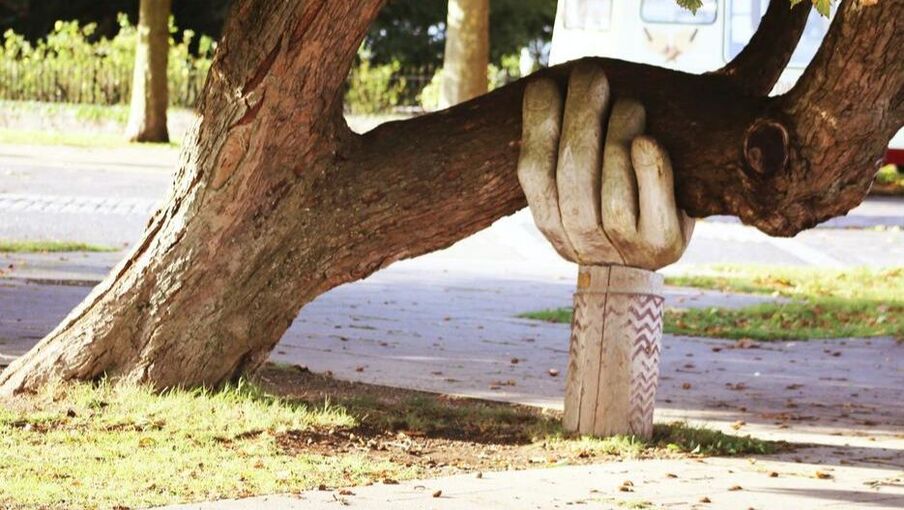
There are many wonderful and effective therapeutic tools and techniques we can integrate and make use of in our work. In my experience as a client and as a practitioner, the therapeutic relationship and your own and often obscured inner resources are the important keys. This is because empathic holding allows one's innate curiosity and wisdom to grow more present and alive and naturally lead inward to fresh insight, new experiencing, and hidden resources. And the change you seek may unfold progressively over time or directly, often arriving quite paradoxically and in its own novel way in present moment experiencing.
“I believe the magic of psychotherapy comes when we explore together the layers of your experience. When you are mirrored - really mirrored – with our mutual compassion for you, our mutual intelligence, and our mutual creativity, healing can happen. Then your next steps appear to you, and become more doable in your life.” Daniel Lesny MFT, Clinical Training Director, The Center for Creative Growth, Berkeley, CA And if you find empirical data an important consideration in how you make choices, ample research supports the vital nature of the therapeutic relationship. "The clear message of five decades of outcome research is that it is the relationship of the client and therapist in combination with the resources of the client that, respectively, account for 30% and 40% of the variance in successful psychotherapy. Techniques account for 15% of the success variance, comparable to 15% success rate related to placebo effect." - The Psychotherapy of Love, Firman,Gila, 2010 Empathy creates the conditions for growth From this secure relationship you may find it possible to determine your own way forward and explore your experience in more richness and depth than ever before. You might begin by examining your present state, to know and appreciate how you came to your present state, to finally meet the sources of your troubling symptoms, and come to terms with whatever you find. You may discover along the way powerful inner resources you were unaware of and enjoy a lasting freedom. You may find not just symptom relief, but an experience of yourself, others and life from an emancipatory perspective. "By this expansion of the potential range of experiencing, we would be more open to being touched by the beauty of nature or compassion for another, and more open as well to knowing our own limitations and human brokenness. We would be more self-empathetic, willing to see the truth of our lives, from the mistakes to the successes, from the pains to the joys. Here, no matter what the particular type of experience, we would know: "This is my experience; this is honestly who I am in this moment." - The Primal Wound, Firman, Gila, 1997 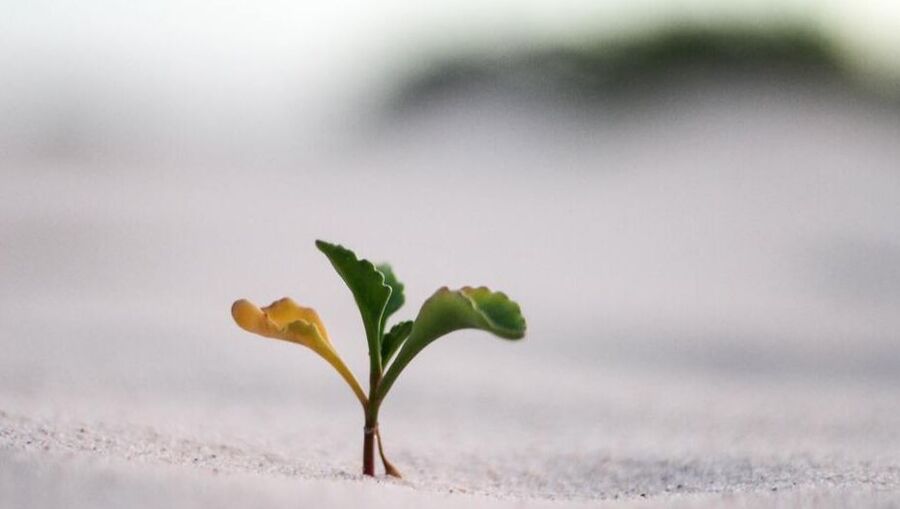
The Journey Return to the beginning So what is the therapeutic journey like? The answer is it's unique for everyone, and we generally begin by starting where we are. It may also be worthwhile to be curious about human development and to begin with an obvious fact that, like much of the human experience, what surface awareness knows is just the tip of a very large experience located in the obscured depths below. Human beings are highly complex and vulnerable. We may begin to appreciate this more if we pause to remember we generally gestate in the womb for roughly nine months and then continue growing toward maturity outside of the womb until the brain is fully formed decades later. This can be extremely important to look into deeply because all during this time we are utterly vulnerable to our surroundings, on which we depend for everything, including our mental health. Consequently, our unique stories contain the often obscured or minimized and profoundly important events of our life, experiences that were pivotal to how we know ourselves, others, the world, and how we made our life choices. By exploring and discussing our life stories we can gain self understanding, empathy for ourselves and others, increase psychological strength, and take an important step toward our goals. Why we are the way we are If we are very lucky in our first relationships, our caregivers use their understanding and their loving feeling for us, their empathy, to create a relationship with us where we feel held in emotional safety and acceptance. We are seen, heard, and gotten in a way that gives us a true and authentic sense of ourselves that we feel and know deeply – we know our humanness and we have compassion for ourselves and, therefore, the capacity to know and have compassion for others. "I remember spending time with my grandfather reading books and talking about them with him. He loved that as much as I did. I can hear him deep down in me saying my mind is okay and I can learn anything if I stick with it." - The Primal Wound, Firman, Gila, 1997 
Our natural response Good enough caregivers also model emotions, wise action, and give us rules, tools and ongoing support to learn life’s lessons and grow. Equally as important, they model how to repair their relationship with us when they rupture it. From this firm foundation we can eventually move into the world and express our choices from our deepest truths and joys and manage with relative emotional resilience, equanimity, and creativity the challenges that come our way. We are also more likely to recognize others who see us with genuine caring and concern, and we can forge good enough relationships outside our family that continue to nurture our growth, and make us stronger mentally, emotionally, and spiritually as our journey continues. Soul Sickness The trouble ensues when our caregivers are not able to provide good enough love, support, safety, and the ways and means to meet life – often because their own caregivers were also unable, or the world outside of the family was too challenging. A child in this uncertain environment will likely suffer experiences where they are dropped emotionally, or worse, into a psychological abyss, which engenders a dark, menacing, and powerful feeling of emotional disintegration – a primal wound to our good sense of self, safety, well-being, and a belief the world will respond to us in a good enough way. Many people refer to this feeling as shame and, for many, it is the most painful human experience, and chief among the disturbing inner states that deny full human life. “Shame is a sickness of the soul. It is the poignant experience of the self by the self, whether felt in humiliation or cowardice, or in a sense of failure to cope successfully with challenge. Shame is a wound felt from the inside, dividing us both from ourselves and from one another.” - Psychologist Gershen Kaufman, 1992 Genesis of the 'Survival Self' 
If we are fortunate, our psyche quickly registers the impending overwhelm of bad feeling, freezes the experience, and stores it safely away from our awareness. Psyche then issues forth a creative response to the whole untenable situation. Since our authentic self is unacceptable in the environment, psyche creates a survival self that will be allowed to exist within the family system, in relationships, and in the world. This rescue comes at the extreme cost of our own true self, but we will survive. And because the whole process happens below the level of awareness, we are unable to perceive that who we are is a response to unspeakable pain and a void, and that our choices reflect an anxious, depressed, numb, hungry, and confused sense of survival, rather than an alive sense of authenticity, relative calm, creativity, and acceptance. “We have all been impacted by non-empathic environments in our lives and so have suffered. This may seem a mild description, given the experience it tries to describe. To say it in another, more experiential way: we have all felt ourselves humiliated, discounted, and used as objects to serve the desperate needs of others; we have all been abandoned, left to disintegrate in the face of unknown horrors; we have all felt the gut-wrenching plummet toward personal non-existence. This may now seem overstated - but not to those aspects of us who bore the brunt of this wounding. And we have all done whatever we needed to do in order to survive such degradation and annihilation - we have developed some amount of survival personality. That is, we have all had the life we were meant to live driven underground; we have all been entranced, brainwashed into forgetting our heights and our depths; we have all been forced to live a pretense, burying our true selves.” - The Psychotherapy of Love, Firman, Gila Enter The Psychotherapist People often access therapy services when the symptoms of survival become more painful than we can bare. A psychotherapist can offer, perhaps for the first time in one's life, the missing experience of an unconditional, positive and warm presence - a good-enough, skillful, caring, and responsive holding environment, and the ongoing support and tools one needs to find one's own hidden power of will and inner resources for transformation. “In my early professional years I was asking the question: How can I treat, or cure, or change this person? Now I would phrase the question in this way: How can I provide a relationship which this person may use for (their, her, his) own personal growth?” – Carl Rogers, American psychologist and among the founders of Humanistic Psychology "The professional's job is to create a safe, supportive setting in which clients can effect their own growth and evolution. A good therapist stays away from the position that as a trained professional, she, he (or they) has the ultimate answers and techniques to fix other people. Instead, the therapist points the way to the clients' own resources, throws them back on their own innate healing power, and allows them to discover their own solutions." - Christina Grof, author, teacher, artist, psychotherapist, and co-creator of Holotropic Breathwork. Psychology has evolved in important ways in recent years and while the therapeutic relationship remains paramount, modern neuroscience allows the psychotherapist to modify the therapeutic relationship for special experiences such as trauma. Here the trauma-wise therapist may take a more active role in support of clients in their recovery from traumatic experiences. "No recovery is possible from trauma without attending to issues of safety, care for the self, repairaive connections to other human beings, and a renewed faith in the universe. The therapist's job is not just to be a witness to this process but to teach the patient how.” - Janina Fisher, PhD, international authority on the treatment of trauma and dissociation Freedom, Choice, Acceptance In this incubator, our awareness can grow alert and strong and begin to explore our complex inner experience, the multiplicity of selves that comprise us. Like the sun gently melting a glacier, our survival self can begin to give way in the light of awareness, and our true self can emerge. We can draw from the many schools and tools of psychology to facilitate this experience, as we gradually begin to dis-identify with survival self and identify with true self. Before too long, we may find we are finally free to use our will to make choices that reflect what we really want and need from ourselves, from others and from the world. “There is a vitality, a life force, a quickening that is translated through you into action, and there is only one of you in all time, this expression is unique, and if you block it, it will never exist through any other medium; and be lost. The world will not have it. It is not your business to determine how good it is, not how it compares with other expression. It is your business to keep it yours clearly and directly, to keep the channel open.” - Martha Graham, American modern dancer, and choreographer And If we persist still further in our awareness work, we may eventually come to a deeper realization of ourselves, our life, and existence itself, and thus find joy and happiness simply by knowing our own true nature. The time will come when, with elation, you will greet yourself arriving at your own door, in your own mirror, and each will smile at the other's welcome,and say, sit here. Eat. You will love again the stranger who was your self. Give wine. Give bread. Give back your heart to itself, to the stranger who has loved you all your life, whom you ignored for another, who knows you by heart. Take down the love letters from the bookshelf, the photographs, the desperate notes, peel your own image from the mirror. Sit. Feast on your life. - Sir Derek Alton Walcott, St. Lucian Poet, winner 1992 Nobel Prize in Literature Couple Therapy People often seek couple therapy when they are preparing for a deeper commitment or find themselves stuck at an impasse with their partner, which is further exacerbated by repetitive patterns of disappointment and conflict. Whether it be from an obvious relationship rupture, communication challenges, or difference, or something that seems entirely mysterious, couple therapy is a safe place to explore, learn, improve, and heal relationship. My psychotherapeutic work with couples rests firmly on well-established attachment theory and integrates other tried and true theoretical approaches. Emotionally Focused Couple Therapy, The Gottman Method, Imago Couple Therapy, Non-Violent Communication, and the relationship intelligence work of Esther Perel provide us with highly effective and creative modes of connection, habits, and tools that can transform our persistent negative relationship cycles into consistent healing cycles. The way toward emotional safety, intimacy, and joy begins when we learn how to identify, de-escalate, and assess what ails our relationship. As we uncover ingrained problematic relational patterns, we can look deeper and find the underlying emotions that are often driving our difficulties without our knowledge. We can follow those feelings into the past and find their source in our family of origin attachment experiences and release long-held conflicts in a way that not only liberates us individually but also frees us to transform our present relationship in the ways we long for. “Believe in a love that is being stored up for you like an inheritance and have faith that in this love there is a strength and a blessing so large that you can travel as far as you wish without having to step outside it.” - Rainer Maria Rilke, Austrian Poet and Novelist And if we find by our thorough exploration we prefer to end our relationship, then we are able to complete this poignant process with awareness, respect and confidence. We may also find endings well played are a powerful lesson in how Nature wastes nothing and transforms everything. We are always given a new choice about how we want to be in relationship with ourselves, with others, and with the world around us. "No mud, no lotus." - Thich Nhat Hanh, founder of Engaged Buddhism 
|
More About Therapy
Finding the right therapist can be challenging and some tips and information can help. For facts about the evolution of mainstream psychotherapy, how to choose the right therapist, the cost effectiveness of psychotherapy, and scientific evidence for psychotherapy you may like to visit this organization: Psychotherapy Action Network.
Issues And Treatment
The following list gives a quick overview of some of the issues I have experience with and the treatment modalities I integrate:
Finding the right therapist can be challenging and some tips and information can help. For facts about the evolution of mainstream psychotherapy, how to choose the right therapist, the cost effectiveness of psychotherapy, and scientific evidence for psychotherapy you may like to visit this organization: Psychotherapy Action Network.
Issues And Treatment
The following list gives a quick overview of some of the issues I have experience with and the treatment modalities I integrate:
|
Issues:
|
|
Treatment modalities:
|